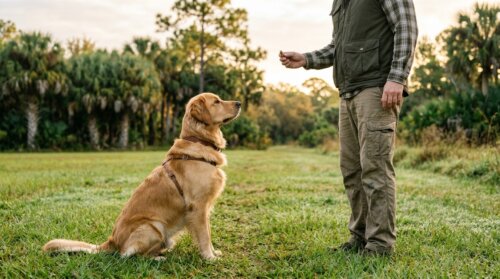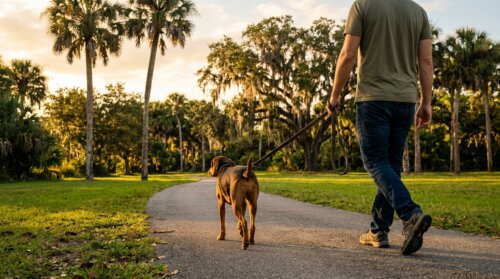


It is one of the most common questions Florida newcomers and visitors ask, and the answer is not what most people hope: what beaches in Florida allow dogs is a short list, not a long one. The default across the state is that dogs are not allowed on public beaches. The exceptions are specific, designated dog beaches, and knowing how the system works saves you a wasted trip and a possible fine.
This guide explains the rules that apply statewide, why they exist, and how to find the beaches that actually welcome your dog.
The Default Rule: Dogs Are Not Allowed
Here is the thing to understand first. In Florida, most public beaches prohibit dogs entirely, including many of the famous ones. This catches people off guard constantly, because it seems like a state this warm and this coastal would be dog paradise everywhere. It is not.
The reason is a mix of public health rules, wildlife protection and sea turtle nesting season, which runs from May through October along much of the coast. During nesting season, even some dog-friendly beaches shorten their hours to protect nesting turtles.
So when you ask what beaches in Florida allow dogs, the honest framing is this: you are looking for the specific designated exceptions, not scanning the whole coastline.
How Designated Dog Beaches Work
A designated dog beach is a stretch of sand, sometimes an entire beach and sometimes just a marked section, where dogs are explicitly permitted. These are set by city or county governments, and each one posts its own rules. The common pattern looks like this:
- 📍 Dogs are allowed only within the posted boundaries, often a specific hundred-yard section.
- 🦮 Leashes are required, usually a maximum of six feet, except at the small number of off-leash beaches.
- 💉 Current vaccination and a license are required, with tags visible.
- 🛍️ Owners must clean up all waste immediately.
- 🚫 Aggressive dogs and dogs in heat are not permitted.
Step outside the designated section, even by a few yards, and the standard no-dogs rule applies again. The boundaries are real and they are enforced.
Leashed vs Off-Leash Beaches
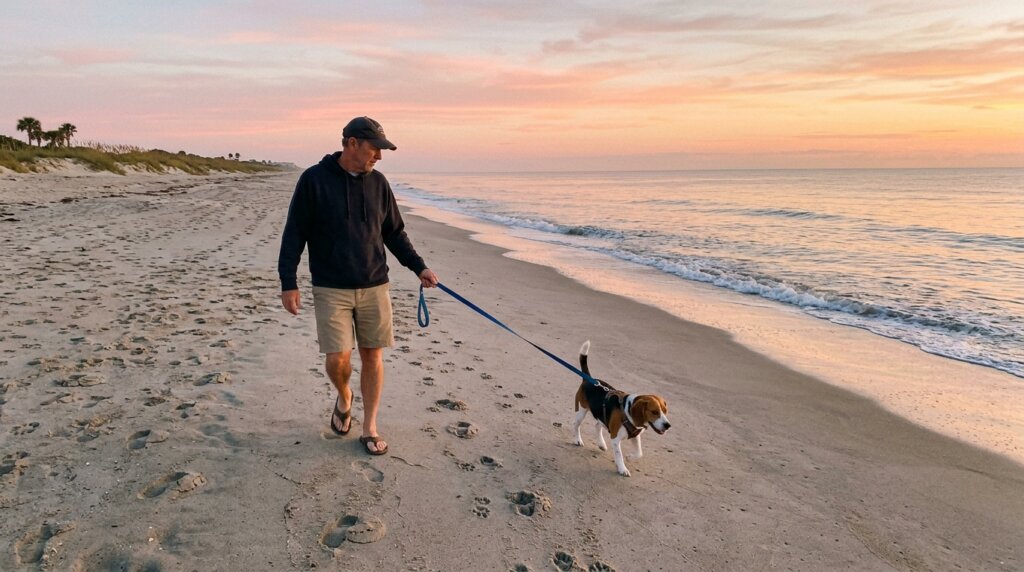
Florida’s dog beaches fall into two categories, and mixing them up is the most common mistake.
Off-leash dog beaches
These are rare and prized. Your dog can run and swim freely within the designated area. Davis Island Dog Beach in Tampa and Fort De Soto in St. Petersburg are two of the best-known on the Gulf coast. In Miami Beach, Bark Beach is the city’s only off-leash dog beach, open on set afternoon hours that change with the season.
Leashed dog beaches
Far more common. Dogs are welcome but must stay on a leash of six feet or less. Canine Beach in Fort Lauderdale is a good example: dogs are permitted in a designated hundred-yard section, on leash, with shortened hours during turtle nesting season from May through October.
Always confirm which type you are visiting before you let the leash off. On a leashed beach, an off-leash dog can mean a fine and, worse, contributes to the complaints that get dog beaches shut down.
The Rules That Apply at Every Florida Dog Beach
Individual beaches vary, but these rules are close to universal. Follow them and you will be welcome anywhere.
- ✅ Clean up immediately, every time. Waste is the number one reason beaches revoke dog access. This is the rule that protects every other rule.
- ✅ Keep current vaccinations and a rabies tag. Required at essentially every designated dog beach.
- ✅ Respect the boundaries. Dogs are permitted only in the posted area.
- ✅ Control your dog. Excessive barking, digging in the sand and aggressive behavior can all get you removed.
- ✅ Observe the handler and dog limits. Most beaches cap the number of dogs per person, commonly two.
- ✅ Check turtle season hours. From May through October, many beaches shift to a 7 a.m. opening to protect nesting turtles.
Heat: The Rule Nobody Posts
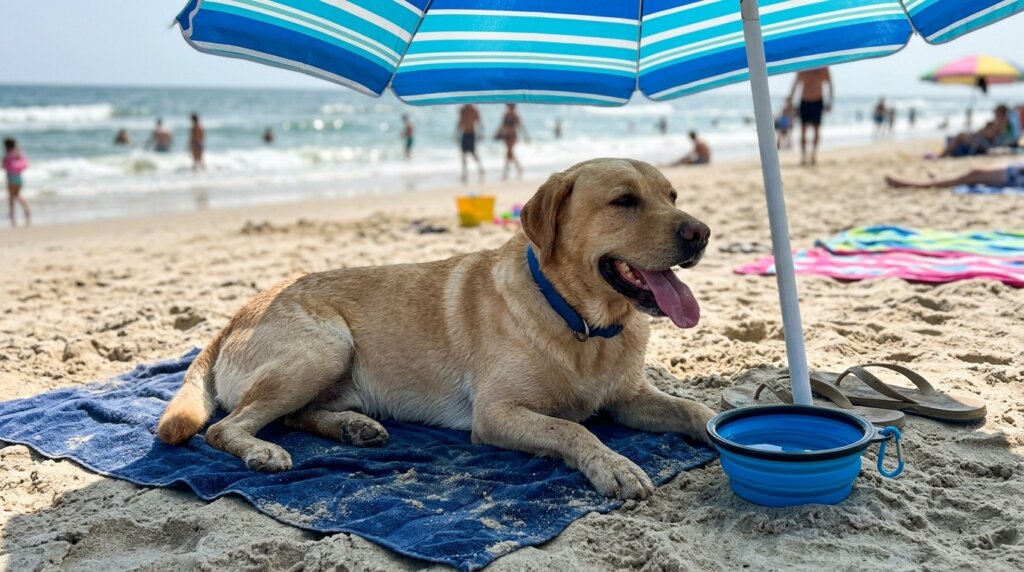
No sign will tell you this, but it is the most important safety rule on a Florida beach. Sand and pavement get hot enough to burn paws, fast.
Before you let your dog onto the sand, press the back of your hand against it and hold for five seconds. If you cannot keep it there comfortably, it is too hot for your dog’s paws. This is why early morning is the best time to visit almost year-round, and the only sensible time in summer.
Bring fresh water, too. Dogs will try to drink salt water, which makes them sick. A day at the beach without fresh water and shade can turn into a heat emergency quickly.
How to Find Dog-Friendly Beaches Near You
Because the rules are set locally and change with the season, the reliable approach is to check each beach individually rather than assume. The fechPup Parks and Outdoor Fun map lists verified dog-friendly beaches and outdoor spaces across Florida, each with its hours, rules and location, so you can confirm before you drive out.
It is the difference between arriving at a beach that welcomes your dog and arriving at one that turns you away at the boardwalk. If you are in the Tampa area specifically, our page on dog-friendly beaches in Tampa Bay narrows it down to the three that allow off-leash access.
Frequently Asked Questions
What beaches in Florida allow dogs?
Only designated dog beaches, which are specific marked areas set by cities and counties. Examples include Davis Island Dog Beach and Fort De Soto near Tampa, Bark Beach in Miami Beach, and Canine Beach in Fort Lauderdale. Most other public beaches prohibit dogs entirely.
Are dogs allowed on Florida beaches without a leash?
Only at a small number of designated off-leash dog beaches, and only within their posted boundaries. The majority of dog-friendly beaches require a leash of six feet or less.
Why don’t most Florida beaches allow dogs?
A combination of public health rules and wildlife protection, especially sea turtle nesting season from May through October. Designated dog beaches are the managed exceptions.
Do Florida dog beaches require vaccination?
Yes. Nearly all require current vaccination and a visible rabies tag, and many require a license. Carry proof if your dog recently moved to the state.
What happens during sea turtle nesting season?
From May through October, many dog-friendly beaches shorten their hours, commonly opening at 7 a.m. instead of sunrise, to protect nesting turtles. Check each beach’s seasonal hours before visiting.