
Every autumn, tens of thousands of people ask some version of the same question: how do I get my dog to Florida from NY, or New Jersey, or Ohio, without putting the dog through something miserable. It is one of the most searched pet travel questions in the country, and the honest answer is that it depends on three things: how far you are coming, how big your dog is, and how well your dog handles confinement.
This guide walks through each option, what Florida actually requires when you arrive, and what to have booked before you get here.
Driving vs Flying With Your Dog
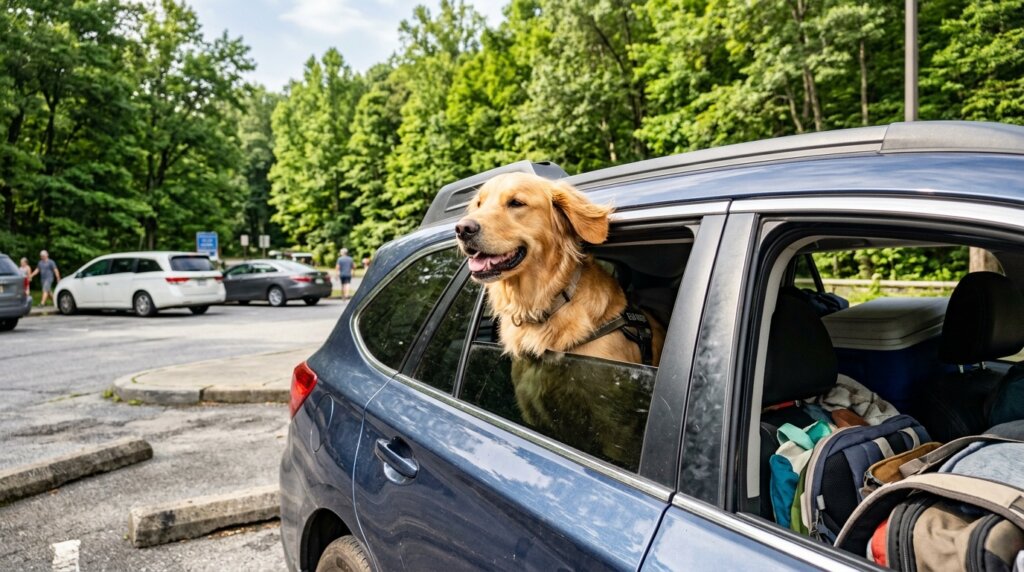
For most people relocating from the Northeast, driving is the better choice. It is not close.
Why driving usually wins
- ✅ No crate confinement for eight hours. Your dog can stretch, drink and relieve itself on your schedule.
- ✅ No breed restrictions. Airlines refuse brachycephalic breeds outright, including bulldogs, pugs, boxers and Boston terriers.
- ✅ No weather embargoes. Airlines suspend pet cargo when ground temperatures exceed roughly 85F, which rules out most of the Florida summer.
- ✅ You control the stops. A dog that gets carsick can be managed. A dog in a cargo hold cannot.
The drive from the New York metro area to Tampa is roughly 1,150 miles, or two days at a humane pace. Plan on stopping every three to four hours, and book pet-friendly accommodation for the overnight rather than assuming you will find something.
When flying makes sense
Flying is worth considering if your dog is under about 20 pounds and can travel in-cabin under the seat, or if you are coming from far enough west that driving means four days instead of two. In-cabin travel is genuinely fine for a small, calm dog. Cargo travel is a different proposition and should be a last resort.
If you do fly, book a direct flight. Connections are where pets get mishandled, delayed on hot tarmac, or misrouted.
Airline Pet Policies and Crate Requirements
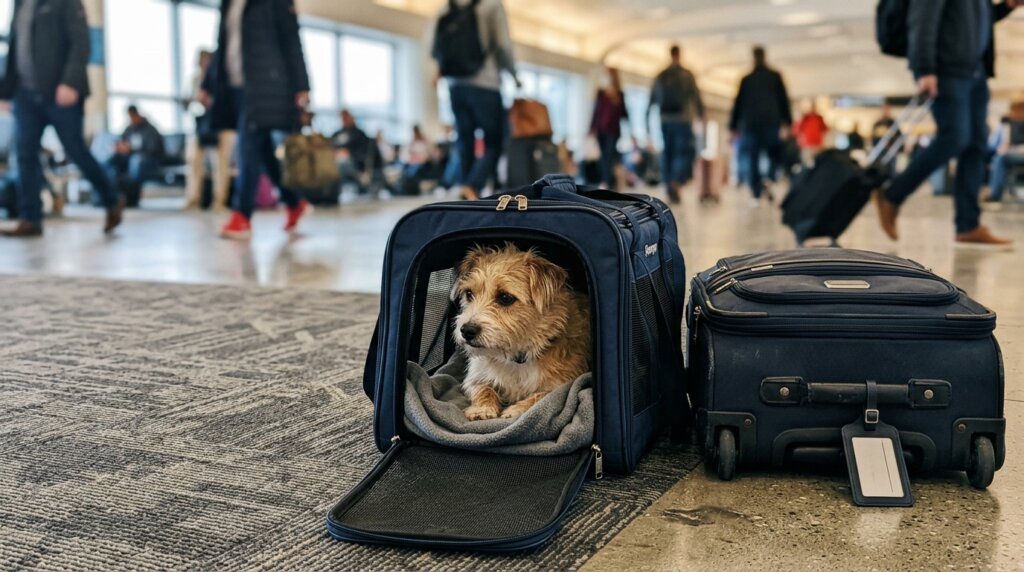
Policies vary, but the common requirements are consistent enough to plan around:
- 📏 The carrier must fit fully under the seat in front of you for in-cabin travel, typically around 18 x 11 x 11 inches.
- 🐕 Your dog must be able to stand, turn around and lie down naturally inside it.
- 💵 Most carriers charge a one-way pet fee of roughly $95 to $150.
- 📅 Advance booking is required, because airlines cap the number of animals per cabin.
- 📋 Health documentation is usually required within ten days of travel.
Book the pet slot the same day you book your own seat. On snowbird routes into Tampa, Orlando and Fort Lauderdale between October and December, in-cabin pet slots fill weeks in advance.
Professional Pet Transport Services
Ground pet transport is a real industry, and it is the right answer for a specific situation: a large dog, a long distance, and an owner who is flying rather than driving. Reputable services use climate-controlled vans, run scheduled routes, and provide updates in transit.
Expect to pay somewhere in the range of $800 to $2,000 depending on distance and whether the transport is shared or private. Before booking, confirm the company is registered with the USDA as a pet transporter, ask how many dogs travel per vehicle, and ask how often they stop.
Avoid anyone who cannot answer those three questions clearly.
Florida Health and Documentation Requirements
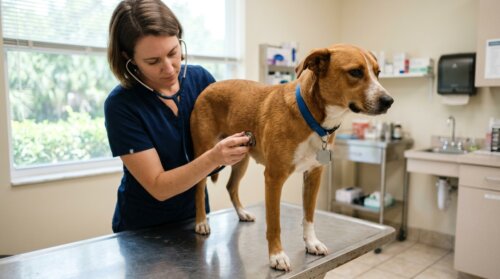
Florida requires an official Certificate of Veterinary Inspection for dogs entering the state, issued within 30 days of arrival. Your dog must also be currently vaccinated against rabies, with documentation showing the vaccination date and the vaccine used.
In practice, nobody stops your car at the state line to check. But the certificate matters more than people expect once you arrive, because you will be asked for it by boarding facilities, daycares, groomers and many apartment communities. Get it before you leave, not after.
Once you are settled, you will also want to establish care with a local veterinarian. If you are landing in the Tampa Bay area, Central Pasco Vet Care in Lutz and Animal Hospital of Tampa Bay are both established practices, and it is worth knowing where the nearest emergency clinic is before you need it. Animal Emergency of Pasco in Port Richey runs overnight hours on weekdays and is open 24 hours on weekends.
Snowbird Season Timing
If you are making this trip seasonally rather than permanently, timing changes the entire experience.
October through December, arriving
This is peak snowbird migration. Pet-friendly hotels along I-95 and I-75 book out, especially on weekends. Boarding facilities in Florida fill for the holidays by early November. Book both ends of the trip early.
January through March, settled
The best months to actually be here with a dog. Daytime temperatures sit in the seventies, pavement stays safe, and the beaches are comfortable all day rather than only at dawn and dusk.
April through May, returning
Heat becomes a genuine factor for the drive north. Start early in the morning, never leave the dog in the car at rest stops, and carry more water than you think you need.
What to Book Before You Arrive
The mistake people make is arriving first and figuring out the dog logistics second. Three things are worth arranging in advance.
Somewhere to stay that genuinely takes dogs
“Pet friendly” covers a wide range. Some properties mean a small dog for a nightly fee; others mean a full welcome program. In Tampa, The Barrymore Hotel Tampa Riverwalk includes a doggie welcome gift and a dedicated pet area. On the coast, The Don CeSar on St. Pete Beach allows up to two pets per room for a $75 nightly fee, with pet rooms on the first floor. You can browse more verified options on the fechPup Stays map.
Boarding or daycare for the first week
Whether you are moving furniture or attending to paperwork, there will be a day when the dog cannot come. Bay Paws Pet Resort in Clearwater and The Wagging Club in Tampa both handle boarding and daycare. In Miami, Dogtown in Coconut Grove has run a cage-free facility since 2012, though note they require proof of DAPP, Bordetella and rabies vaccinations and conduct a temperament evaluation before accepting new dogs.
That evaluation requirement is common in Florida, and it is another reason to sort your paperwork before the drive.
A first outing that is easy
Give the dog something good on day one. A fenced dog park or an off-leash beach resets a stressful travel week faster than anything else. The Parks and Outdoor Fun map shows what is near wherever you have landed. If you are settling in Tampa Bay, start with dog parks in Tampa or the three dog-friendly beaches in Tampa Bay. Once the boxes are unpacked, you will want a groomer too: we list every one in Riverview and New Port Richey.
Frequently Asked Questions
How do I get my dog to Florida from NY if I am flying and my dog is too big for the cabin?
Use a ground pet transport service rather than airline cargo. It costs more but avoids tarmac heat delays, and the dog travels in a climate-controlled vehicle with regular stops.
Does Florida require a health certificate for dogs?
Yes. An official Certificate of Veterinary Inspection issued within 30 days of entry, plus current rabies vaccination. Boarding facilities and apartment communities will ask for it.
How long does it take to drive to Florida with a dog?
From the New York area, plan two days to Tampa with an overnight stop. It can be done in one very long day, but with a dog it is not advisable.
What is the best time of year to move a dog to Florida?
October and November. The weather is mild for the drive, and you arrive before the December holiday crunch on boarding and pet-friendly accommodation.
Can I leave my dog in the car at rest stops in Florida?
No. Interior temperatures rise dangerously fast even on mild days, and Florida law allows bystanders to intervene to rescue an animal from a hot vehicle. Take the dog with you.