

Bufo toads and dogs are a combination that can turn fatal in under fifteen minutes. If your dog has just mouthed a large toad and is foaming at the mouth, stop reading and jump straight to the emergency steps below. Every minute matters.
For everyone else, this guide covers what these toads are, why they are so dangerous in Florida specifically, how to recognize poisoning, and what to do before you reach a veterinarian.
What Is a Bufo Toad?
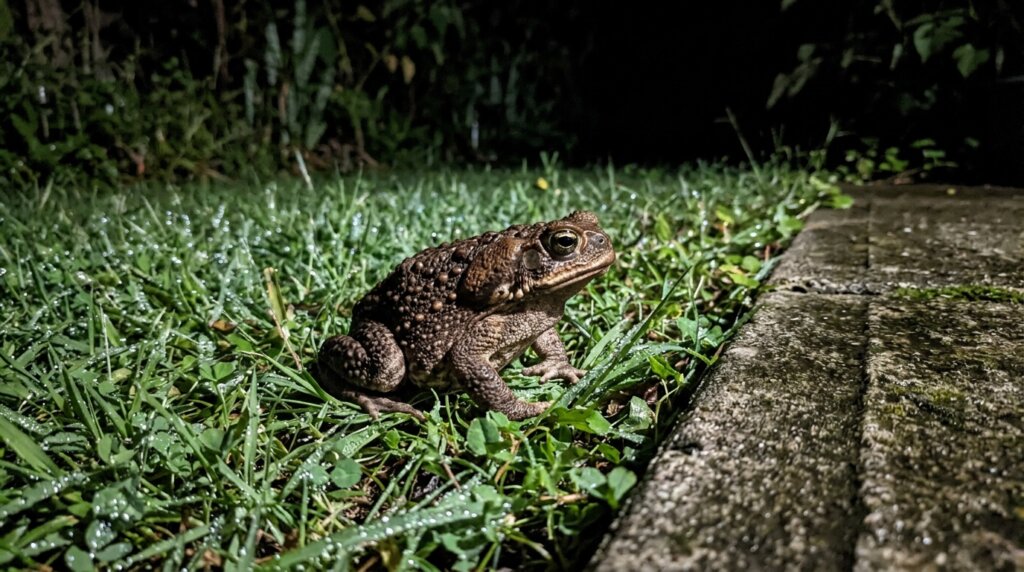
The bufo toad, also called the cane toad or giant toad, is an invasive species established across central and south Florida. Adults reach six to nine inches and are considerably larger than any native Florida toad.
Behind each eye sits a large parotoid gland. When the toad feels threatened, that gland secretes a milky white toxin called bufotoxin. A dog that bites, licks or even mouths the toad absorbs the toxin through the gums and tongue almost instantly.
How to tell a bufo toad from a harmless native toad
- Size. Anything larger than about four inches is almost certainly a bufo. The native southern toad rarely exceeds three inches.
- Glands. Bufo toads have large triangular glands sloping down from behind the eyes onto the shoulders.
- No ridges. Native southern toads have distinct ridges on the head. Bufos do not.
- Sitting posture. Bufo toads sit upright with front legs straight rather than crouched.
Why Florida Is the Problem
Bufo toads thrive in exactly the conditions Florida provides year-round: warm nights, standing water and irrigated lawns. They are most active after dark, after rain, and during the wet season from roughly May through October.
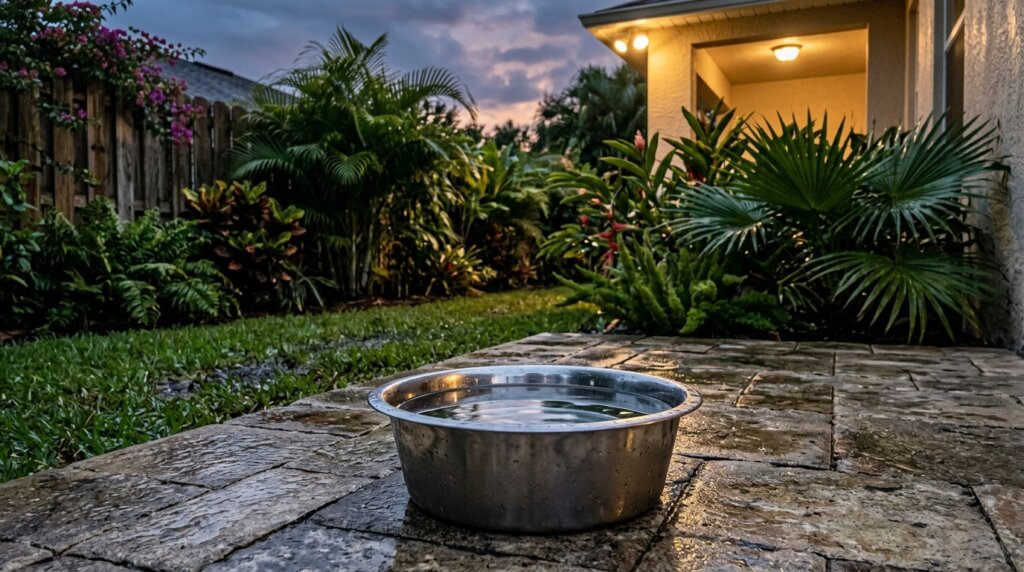
They congregate around the things people put in their yards. Dog water bowls left outside overnight, pool decks, garden lights that attract insects, and shallow drainage areas are all reliable toad magnets. A toad sitting in an outdoor water bowl can contaminate the water itself.
This is why bufo toads and dogs meet so often in Florida. The toad is not hunting your dog. It is sitting in the same places your dog drinks and sniffs.
Symptoms of Bufo Toad Poisoning
Symptoms appear within seconds to minutes. Recognizing them fast is what determines the outcome.
Early signs
- 🟡 Intense drooling, often thick and foamy
- 🟡 Pawing frantically at the mouth
- 🟡 Bright red, inflamed gums
- 🟡 Head shaking and obvious distress
- 🟡 Vomiting
Advanced signs, meaning an immediate emergency
- 🔴 Stumbling, disorientation or loss of coordination
- 🔴 Rapid or irregular heartbeat
- 🔴 Elevated body temperature
- 🔴 Seizures
- 🔴 Collapse
Small dogs deteriorate fastest because the dose relative to body weight is far higher. A toxic exposure that a large dog survives can kill a small dog within fifteen to twenty minutes.
Emergency First Aid: What to Do Right Now
The goal is to remove toxin from the mouth without letting the dog swallow more water. Do these steps immediately, then drive to a veterinarian regardless of how the dog seems.
- Wipe the gums and tongue with a damp cloth. Use a wet washcloth and wipe firmly, front to back. Rinse the cloth and repeat several times. This removes more toxin than rinsing alone.
- Rinse the mouth with a hose or wet cloth for five to ten minutes. Point the dog’s head downward so water flows out of the mouth, never toward the throat. Do not spray water directly down the throat, because a dog can aspirate it.
- Do not induce vomiting. It does not help with this toxin and increases aspiration risk.
- Keep the dog cool and calm. Bufotoxin raises body temperature and stimulates the heart. Excitement makes it worse.
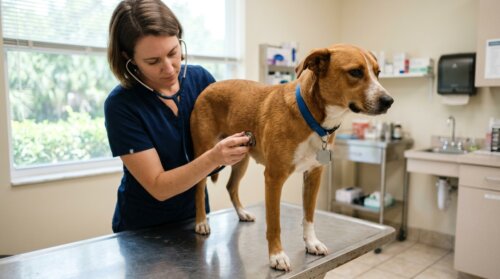
- Go to a veterinarian. Even if the dog appears to recover, cardiac effects can develop later.
Where to go in the Tampa Bay area
Know this before you need it. Animal Emergency of Pasco in Port Richey covers weeknights from 5:30 PM to 8:00 AM and is open 24 hours on weekends and major holidays, which matters because bufo encounters happen overwhelmingly at night. Animal Hospital of Tampa Bay and All Pets Hospital in New Port Richey are both options during daytime hours, and Central Pasco Vet Care in Lutz serves the northern suburbs.
Save at least one of these numbers in your phone now. You can find more clinics across Florida on the fechPup Pet Services map.
How to Keep Bufo Toads Out of Your Yard
Prevention is genuinely effective, and it comes down to removing what attracts them.
- ✅ Bring water bowls inside at night. This is the single highest-impact change.
- ✅ Feed pets indoors. Outdoor food bowls attract both toads and the insects they eat.
- ✅ Turn off unnecessary outdoor lighting. Lights draw insects, insects draw toads.
- ✅ Cut grass short and clear brush piles. Toads shelter in cover during the day.
- ✅ Fix standing water. Clogged gutters, plant saucers and low spots in the lawn are breeding sites.
- ✅ Check the yard before letting the dog out at night. A flashlight sweep takes thirty seconds.
Training that helps
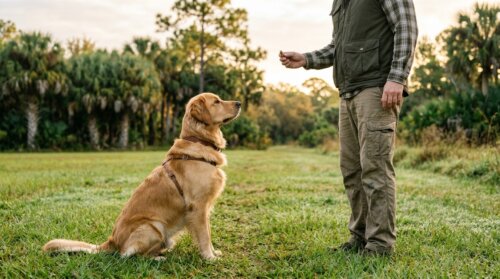
A reliable “leave it” command is the best long-term protection, particularly for dogs that hunt by instinct. If your dog is a persistent toad chaser, professional training is worth the investment. The Pet Services map lists trainers across Florida.
Frequently Asked Questions
How quickly can a bufo toad kill a dog?
A small dog can die within fifteen minutes of a significant exposure. Larger dogs may take longer but can still deteriorate rapidly. Treat every exposure as an emergency.
What frogs are poisonous to dogs in Florida?
The bufo or cane toad is the serious threat. Native Florida frogs and the southern toad can cause mild mouth irritation and drooling, but they are not life threatening. Size is the quickest indicator: large means dangerous.
My dog licked a toad but seems fine. Do I still need a vet?
Yes, if the toad was large. Rinse the mouth thoroughly and call a veterinarian for guidance. Cardiac effects can appear after the initial symptoms subside.
Are bufo toads dangerous to humans?
The toxin can irritate skin and eyes, so wash your hands after any contact and keep children away. It is not the emergency for people that it is for dogs.
What time of year are bufo toads most active in Florida?
The wet season, roughly May through October, and especially on warm nights following rain. They are active year-round in south Florida.