

In Florida, the pavement is a hazard for most of the year, not just in July. Learning how to protect dog paws from hot pavement is one of the most useful things a Florida dog owner can do, because pavement burns are common, painful and entirely preventable. This guide covers the simple test that prevents them, the gear that helps, and what to do if your dog’s paws are already burned.
How Hot Does Florida Pavement Really Get?
Hotter than people believe. On an 85-degree day, which is a mild Florida afternoon, asphalt in direct sun can reach 135 degrees. On a 95-degree day it can exceed 140 degrees. Skin contact at 140 degrees causes burns in under a minute.
The trap is that the air can feel pleasant while the ground is dangerous. A 77-degree day, which sounds perfect for a walk, can still produce asphalt temperatures around 125 degrees in full sun. Your dog is walking barefoot on that surface the entire time.
This is why hot pavement for dogs is a year-round concern in Florida rather than a summer-only one. The sun does the damage, and Florida has sun in February.
The Seven-Second Test
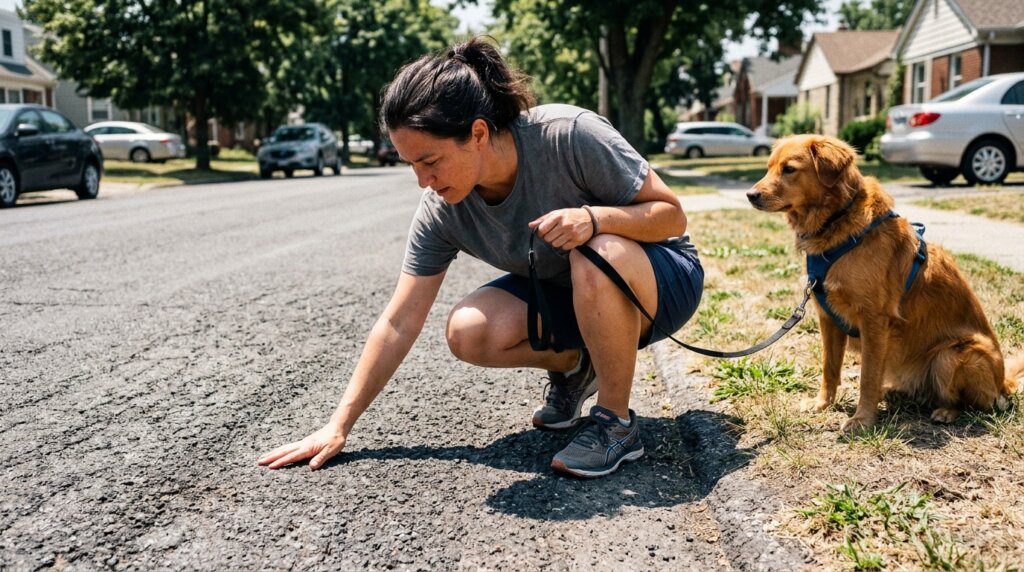
This is the single most important habit, and it takes seven seconds.
Before every walk, press the back of your hand flat against the pavement and hold it there. If you cannot comfortably keep it there for seven full seconds, the surface is too hot for your dog’s paws. Full stop. Do not start the walk.
Use the back of your hand rather than your palm, because your palm is tougher and will mislead you. If it is too hot for the back of your hand, it is too hot for paws.
When pavement is at its worst
- Late morning through late afternoon. Roughly 10 a.m. to 5 p.m. is the danger window in Florida for most of the year.
- Full sun on dark surfaces. Asphalt and dark concrete absorb the most heat.
- After a long sunny stretch. Pavement stores heat and stays hot well after peak temperature.
How to Protect Dog Paws From Hot Pavement
Once you know a surface is dangerous, there are several effective ways to protect your dog’s paws. Use whichever fits your dog and your routine.
Walk at the right time of day
The easiest and most reliable fix. Walk in the early morning or after sunset, when the pavement has cooled. In a Florida summer, this is really the only safe window for a normal-length walk. Shift your whole routine earlier and later.
Stay on grass and shade
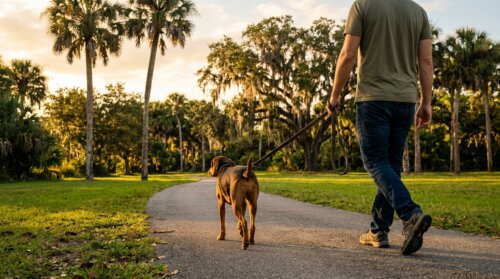
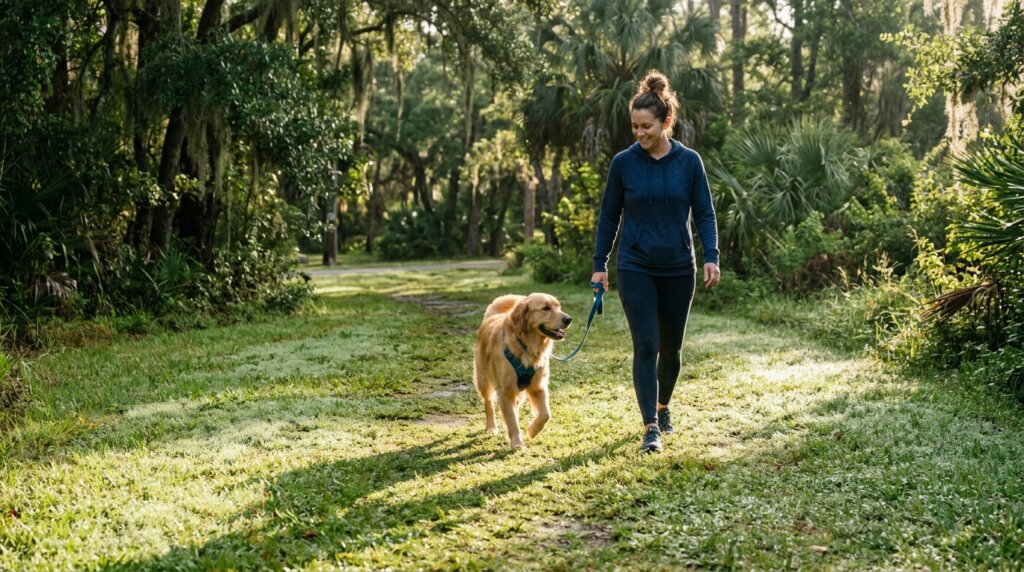
Route your walk along grass, dirt paths and shaded sidewalks rather than open asphalt. Parks with shaded trails are ideal. Flatwoods Park in Thonotosassa has a seven-mile paved loop shaded by tree cover, and the Lowry Park Trail in Tampa winds through oak woodlands along the river. Shaded ground runs far cooler than open pavement.
Use dog booties
Properly fitted booties are the most complete protection, putting a barrier between paw and pavement. They take some getting used to, so introduce them indoors first and keep early sessions short. For dogs that tolerate them, they make midday walks genuinely safe.
Apply paw wax
Paw wax adds a protective layer and is easier for many dogs to accept than booties. It offers less protection than a bootie but is better than nothing, and it also helps against rough or hot sand at the beach.
Toughen and check the paws
Dogs walked regularly on varied surfaces develop tougher pads over time. Whatever you do, check the pads after every walk in warm weather for redness, cracks or tenderness.
Signs Your Dog’s Paws Are Burned
Catching a burn early prevents it from getting worse. Watch for:
- 🔴 Limping or refusing to walk
- 🔴 Licking or chewing at the paws
- 🔴 Pads that look darker than usual, or red
- 🔴 Visible blisters or missing patches of pad
- 🔴 Reluctance to put weight on one or more feet
What to Do If the Paws Are Already Burned
If you suspect a burn, act quickly and calmly.
- Get off the hot surface immediately. Move to grass, shade or indoors.
- Cool the paws. Run cool, not cold, water over them or apply a cool damp cloth for several minutes.
- Keep them clean. Gently rinse away debris. Do not scrub.
- Prevent licking. Licking introduces bacteria and slows healing.
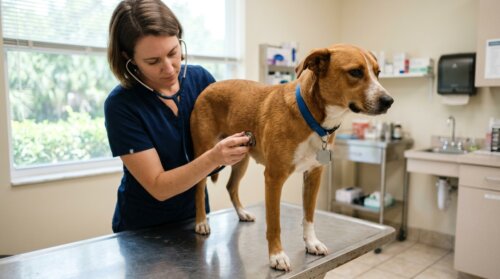
- Call a veterinarian. Anything beyond mild redness needs professional care. Blisters, raw pads or limping warrant a visit.
For anything serious, do not wait it out. Beach Park Animal Clinic in Tampa is one option for daytime care, and you can find veterinarians and emergency clinics across Florida on the fechPup Pet Services map. Burned pads can become infected, so err toward getting them checked.
Cool sand and shallow water beat hot pavement every time. All three dog-friendly beaches in Tampa Bay open at or near sunrise, and every entry on our dog parks in Tampa page lists its hours so you can plan around the heat.
Frequently Asked Questions
Can dogs walk on hot pavement?
Not safely once it fails the seven-second hand test. Pavement that is too hot for the back of your hand for seven seconds can burn a dog’s paws in under a minute. Walk on grass, in shade, or at cooler times of day instead.
How hot is too hot for a dog’s paws?
Surface temperatures around 125 degrees and above can cause burns. Because the air temperature does not tell you the pavement temperature, use the hand test rather than the thermometer.
What time of day is safe to walk a dog in Florida?
Early morning before the sun is high, and after sunset once the pavement has cooled. In summer, avoid the 10 a.m. to 5 p.m. window for pavement walks entirely.
Do dog booties really work for hot pavement?
Yes, properly fitted booties are the most complete protection. Introduce them indoors first so your dog adjusts, then use them for necessary daytime walks.
How do I treat a dog’s burned paw at home?
Get off the hot surface, cool the paws with cool water for several minutes, keep them clean, and stop your dog from licking. Then call a veterinarian for anything beyond mild redness.